


Brak produktów w koszyku.

VR grants for businesses in Poland: assess a funding call
VR grants for businesses in Poland: assess a funding call

A company planning a VR training room finds a Polish funding programme for digitalisation. Whether it can apply depends on the particular call: eligible applicants, supported activities and permitted costs. This guide helps businesses considering a project in Poland record those conditions before ordering equipment.
Describe the project you want to deliver
“Six VR headsets” describes equipment. Add who will use it, what they need to do and how you will assess whether the content serves that purpose.
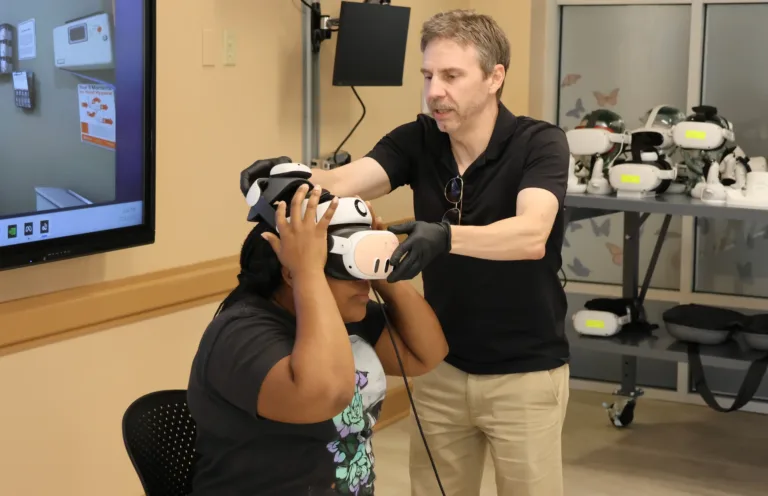
A training department might want staff to practise identifying machine components before working with the real equipment. This is an illustrative project brief, not a funded project or a ZenithXR case study. It also requires suitable software, a prepared trainer and a plan for the sessions.
Separate essential items from optional additions so that the person assessing funding eligibility and the equipment supplier understand the same project.

Find the specific call and its documents
The Polish European Funds Portal’s application guide uses the applicant type, project location and subject area as starting points for finding support. A search result identifies an option; its documents determine the conditions.
Record the call's name, reference, managing institution and the date you read it. Gather the applicable rules, assessment criteria, eligible expenditure guidance and application instructions. Results from a previous round do not establish that new applications are open.
For example, PARP’s Ścieżka SMART call for implementing R&D results covered a defined type of SME project and closed on 11 June 2026. Its name alone does not establish that buying a ready-made VR set qualifies, or that a later round has identical rules.
Record six conditions
Use the following as a working assessment sheet, rather than an official application form. For each field, record your answer and the document section supporting it. Mark unresolved points explicitly.
- Applicant. Identify the permitted organisation type or business size and the conditions your company must meet. Requirements for a business cannot automatically be applied to a school or university.
- Region. Record where the VR room will operate. Establish whether the rules also consider the registered office or another business location.
- Purpose. Match the intended VR activity to the call’s objectives. Where R&D results are required, buying modern equipment does not replace them.
- Costs. List headsets, accessories, computers, licences, content production and trainer preparation. Match each to an expenditure category, restrictions and any VAT question that needs resolving. A supplier’s quote does not establish eligibility.
- Dates. Record the application deadline, when activities and expenditure may begin, and the completion deadline. Compare these with delivery, software setup and the first planned sessions before committing to a purchase.
- Funding and obligations. Establish the required contribution, payment arrangements, reporting and obligations after completion. Determine whether advance payments or reimbursement are available and on what terms. Avoid assuming a universal percentage, retention period or number of supplier quotes.
Finish with a decision: proceed with assessment, seek clarification on a named point, or stop because a specific condition is not met.
A historical KPO call shows why the details matter
The KPO A2.1.1 competitive call managed by Poland’s Ministry of State Assets was for large enterprises, with a minimum project value of PLN 8 million net. Applications closed on 30 November 2023.
This is a historical, closed call, not an available route for an SME buying a few headsets. The word “digitalisation” does not override applicant, scale or timing requirements. This example makes no claim about the availability of other KPO instruments.
Prepare a quote that matches the project
Give the supplier your intended use, workstation count and software requirements. Request separate lines for equipment, accessories, licences, setup and support. For recurring fees, include the term and billing unit, such as a device or user.
Keep total project cost, eligible expenditure and your planned contribution separate in the working budget. Add the supplier's payment dates. Compare them with the call's payment rules to assess how much cash the business needs at each stage.
Establish supplier selection requirements from the applicable documents. Neither two quotes nor unrestricted ordering dates should be assumed.

Resolve open questions before applying
A useful question to the managing institution identifies the call, document section and proposed expense. An annual licence for a defined training activity is easier to assess than “Does VR qualify?” Keep the response with the relevant document version.
The European Funds Portal also describes free consultations through Poland's European Funds Information Points (PIFE). Equipment quotations serve a different purpose: they define the set and its cost, without determining the application outcome.
Request a VR equipment quote with your intended use, application requirements and required items. Compare the resulting offer with the chosen call’s documentation before deciding to buy.

Author
Dariusz Walczak
Dariusz Walczak is responsible for marketing at Zenith XR. He manages the brand's communications and blog content.
Need specific advice?
Choose the right XR equipment for your needs
Tell us how you plan to use XR headsets. We will help you choose the right equipment for home, school or business.



Add comment