


No products in the cart.
VR headsets and Laboratories of the Future: what the programme actually says, what it does not say and how schools can use it today
VR headsets and the Laboratories of the Future programme: what the programme actually says, what it does not say and how to use it today
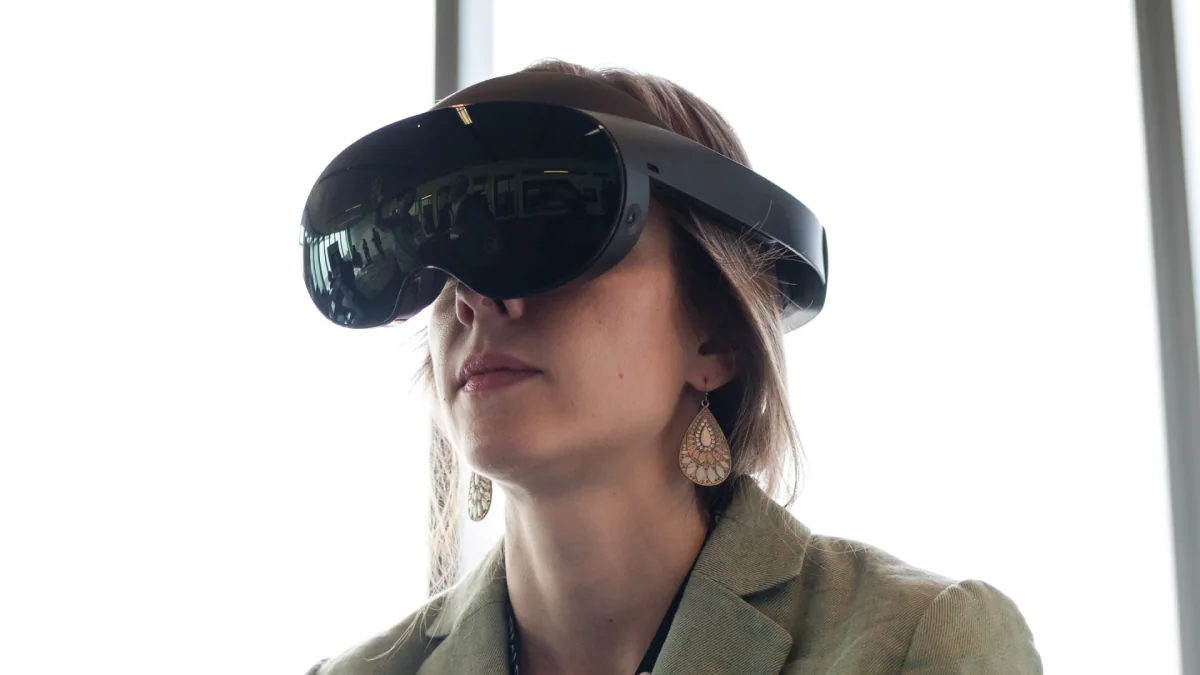
Many primary schools have VR headsets purchased through the Future Laboratories programme. Just as many headteachers ask whether the programme can fund additional units. The answer requires separating three issues that are often conflated: what appears in the programme's official catalogue, the spending deadlines and the obligations of a school that has already received equipment. Below, we rely solely on programme pages maintained by the Ministry of Education together with GovTech Poland.
What is the programme?
Future Laboratories is an initiative for primary schools that aims to develop pupils' technical and creative skills in science, technology, engineering, art and mathematics. Funding went to the bodies responsible for running schools, with no requirement for their own contribution. These bodies made the purchases, although, as the programme website states, ‘bodies responsible for running schools may entrust purchases to headteachers’.
Are VR headsets included in the programme catalogue?
They are not part of the core equipment. The catalogue lists four mandatory groups: 3D printers with accessories, microcontrollers with sensors and prototyping boards, recording equipment (cameras, microphones, lighting) and soldering stations. It does not list VR headsets, VR glasses or virtual reality in this section.
So why are there headsets in schools? They came from the optional section. Beyond the mandatory set, schools selected equipment themselves, and VR sets were purchased from this allocation. This is why school websites across Poland feature reports of lessons using headsets as an outcome of Future Laboratories, even though the equipment itself is not on the mandatory list.
Deadlines: they have already passed
The programme website gives the spending deadlines: schools run by local authorities had to spend the funds by 31 August 2022, with 60 per cent spent by the end of 2021, while other schools had until 30 June 2023. The catalogue gives 30 June 2023 as the date by which core equipment was to be available in every primary school.
Wniosek praktyczny: if you are planning to buy headsets today, do not assume that Future Laboratories will fund them. Check current announcements on the programme website and from the regional education authority, while also considering other sources: the budget of the body responsible for running the school, parent council funds, municipal and EU projects delivered by the local authority, and sector-specific projects for secondary schools. We do not give funding amounts or call names here because they change every school year.
An obligation that is easy to overlook
The programme requires ‘using the equipment for at least five consecutive school years, for an average of at least 3 hours of classes in each teaching week’. This obligation applies to equipment bought through the programme, including headsets from the optional section.
In practice, this means that a VR set sitting in a cupboard is more than an educational problem. If you have Future Laboratories headsets that nobody uses, it is worth returning to them sooner rather than later: select applications for specific subjects, train teachers and include VR in lesson plans. The most common reasons why headsets are set aside are a lack of Polish-language lesson materials, no person responsible for the equipment and the difficulty of charging several units at once. All three can be solved without buying new devices.
What schools buy
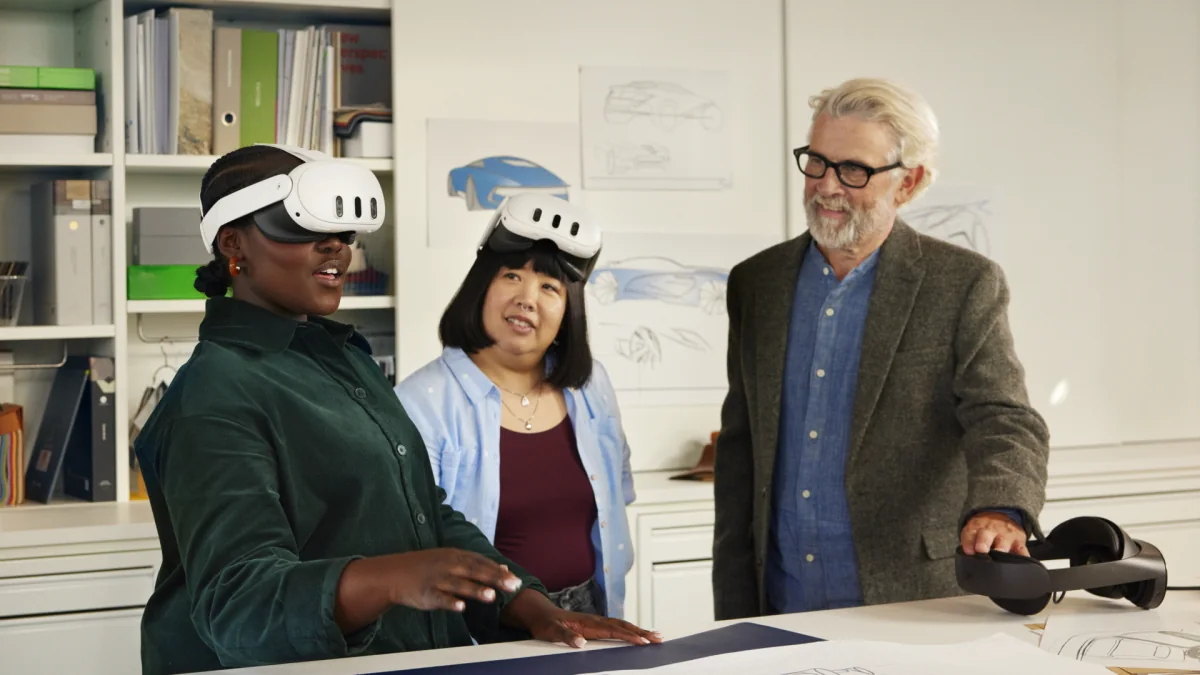
Reports published by schools show a recurring pattern: several standalone headsets, used in rotation during lessons in subjects such as biology, geography, physics and history. Pupils work in groups and the equipment moves between classes. Large labs with a dozen or more sets are less common.
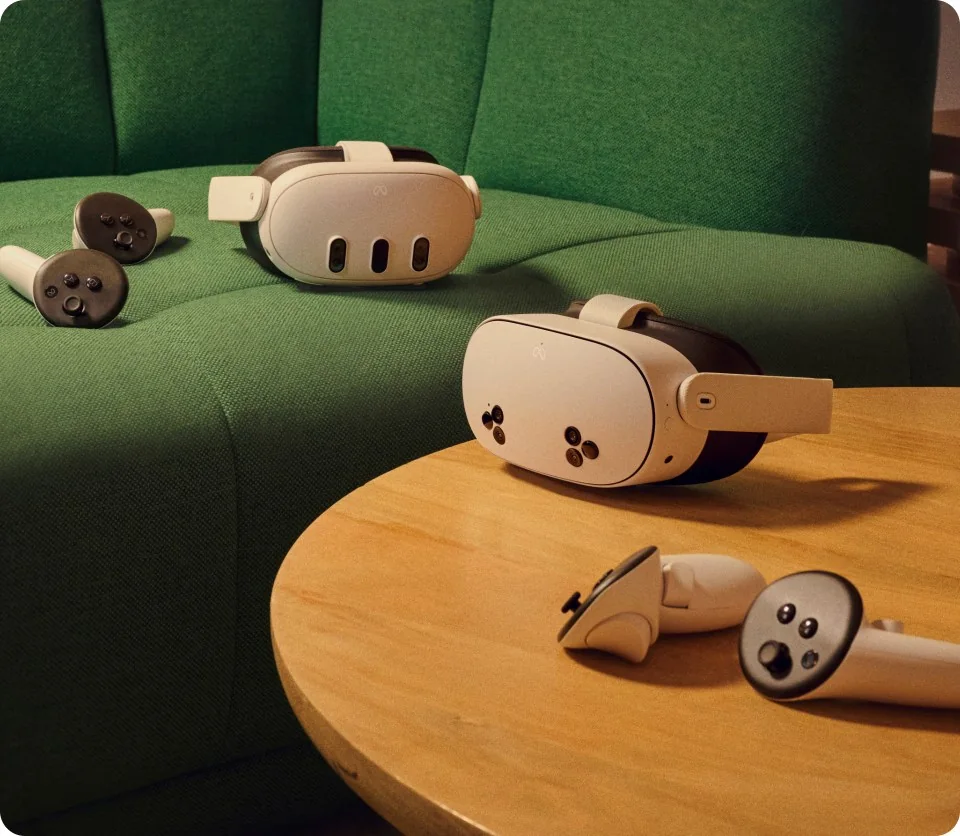
For this use, choose headsets that do not require a computer. In our range, schools most often choose Meta Quest 3S (the same processor as Quest 3), Meta Quest 3 (sharper image, 512 GB) and PICO 4 Ultra as an alternative that does not require a Meta account.
How to prepare a specification for a request for quotation
Whatever the funding source, the request should describe the entire set, not only the headsets. Items schools most often overlook:
- Number of headsets plus one spare for every 8–10.
- A standalone model requiring no computer, with interpupillary distance adjustment from 58 mm.
- Charging and storage: transport and charging case for 4–10 headsets or charging cabinet for 20 units, lockable.
- Hygiene: silicone facial interfaces and disposable masks.
- Device management for 10 or more headsets (install applications from one dashboard, kiosk mode).
- Configuration of school accounts and teacher training included in the delivery price.
- Warranty, servicing and support contact.
- VAT invoice issued to the school or the body responsible for running it.
Our separate guide to choosing a VR set for a school provides a detailed specification, including how many headsets a class needs, which applications to start with and the difference between a case and a cabinet.
What the programme website does not say
You must establish three points independently because the programme materials do not cover them: the current status of funding calls and any continuation in the current school year (check the programme website and announcements from the regional education authority), how purchases are accounted for in your municipality, and whether the bodies responsible for running your school allow educational software licences to be purchased alongside hardware. The last item is often overlooked, and without lesson content the headsets remain in the cupboard.
FAQ
Can VR headsets be bought through Future Laboratories?
The core equipment catalogue does not list them. Schools bought them through the optional section, which they selected themselves. The programme's spending deadlines passed in 2022 and 2023, so a purchase today requires checking current announcements and usually a different funding source.
What is included in the programme's core equipment?
3D printers with accessories, microcontrollers with sensors and prototyping boards, recording equipment and soldering stations.
How long must equipment from the programme be used?
The programme requires equipment to be used for at least five consecutive school years, for an average of at least three hours of classes in each teaching week.
We have headsets from the programme, but they are sitting unused. What should we do?
Start by selecting applications for specific subjects and providing brief teacher training, then address charging and storage. This is usually enough to bring the equipment back into lessons without buying anything new.
Who formally buys the equipment: the school or the municipality?
Purchases are made by the bodies responsible for running schools, which may entrust them to headteachers.
Would you like a set specification for a request for quotation or help bringing your existing headsets back into use? Tell us how much equipment you have and which subjects the lessons cover: contact us.

Author
Dariusz Walczak
Dariusz Walczak is responsible for marketing at Zenith XR. He manages the brand's communications and blog content.
Potrzebujesz konkretu?
Choose the right XR equipment for your needs
Tell us how you plan to use XR headsets. We will help you choose the right equipment for home, school or business.
Related articles
 Guides
PICO 4 Ultra Enterprise or Meta Quest 3 for business: which should you choose for training, fleet management and presentations?
5 min czytania Guides
VR treadmills: KatWalk C2+ or Virtuix Omni One, and when to hire
4 min czytania Guides
Dodaj komentarz