


No products in the cart.
VR headsets for schools: how to choose a classroom kit (hardware, apps, charging and management)
VR headsets for schools: how to choose a classroom set (hardware, apps, charging and management)
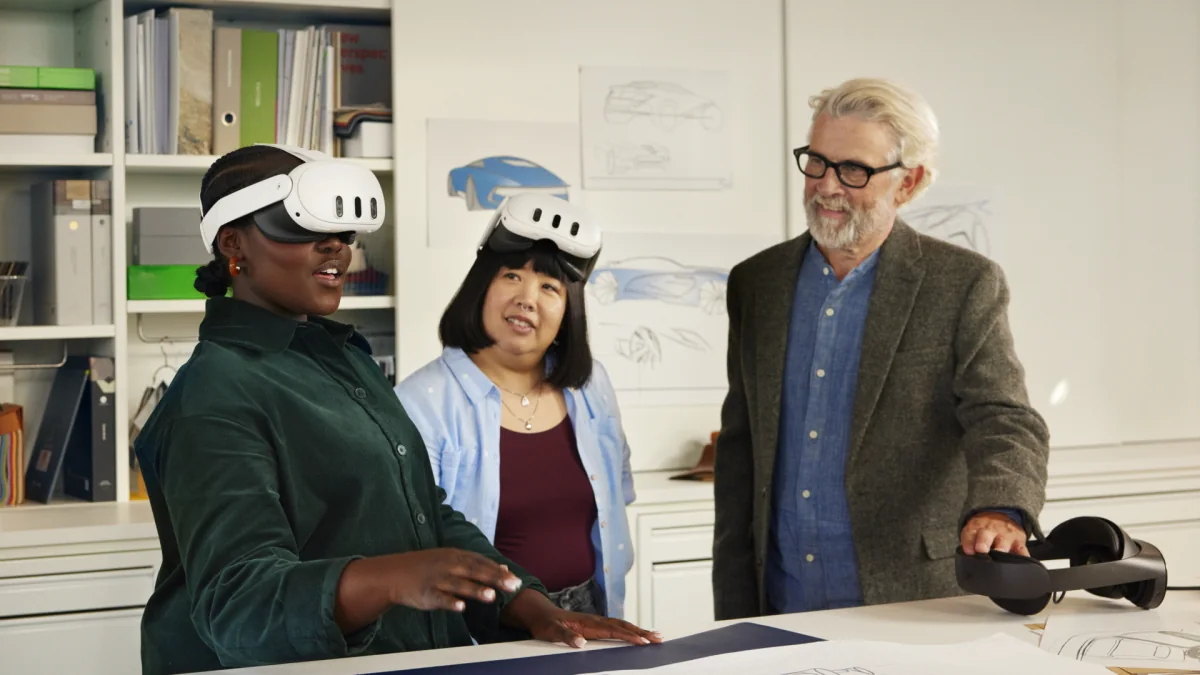
A school buys VR headsets differently than a gamer does. It’s not about buying a single pair with the best graphics; what matters is whether 8, 12, or 20 headsets can be distributed to students in 5 minutes, whether a lesson can be conducted without any glitches, whether they can be recharged before the next class, and whether they can be locked away. This guide walks you through the decisions in the order in which principals and coordinating teachers make them. We base it on our own VR classes conducted in elementary schools and cultural centers, as well as on the questions institutions ask before making a purchase.
First: what will the school use VR for?
The answer determines everything that follows. The three most common scenarios:
- Lekcje przedmiotowe (geography, biology, history, physics, languages). Students wear headsets for 10–15 minutes; the rest of the lesson is with the teacher. Required: ready-made materials in Polish, a simple setup, and plenty of headsets available at once.
- Workshop or extracurricular club (computer science, 3D design, creating custom scenes). Fewer headsets, but more powerful ones, sometimes paired with a computer.
- Demonstrations and events (open houses, virtual tours, team-building). Portability, carrying case, fast charging.
Most elementary schools start with Scenario 1. In this case, the following factors are more important than technical specifications: the number of headsets, battery life, charging, and whether the teacher can see what the students are doing.
How many VR headsets per class
A class usually has 20–28 students. Practical options:
- Set of 8–10 headsets and work in pairs or rotating groups. One group uses VR while the other completes a paper-based task or discusses what they have seen. This is a common way to start using VR and can be better for teaching than 25 headsets at once, because the teacher can manage the group.
- Set of 15–20 headsets For larger schools and labs where VR is a regular part of classes. Requires a charging cabinet and a management system.
- 1–4 headsets For an extracurricular club or computer lab.
Dolicz zawsze one spare pair of goggles for every 8–10 pairs. One pair that’s dead or dirty shouldn’t hold up the lesson.
What type of goggles: standalone, not connected to a computer
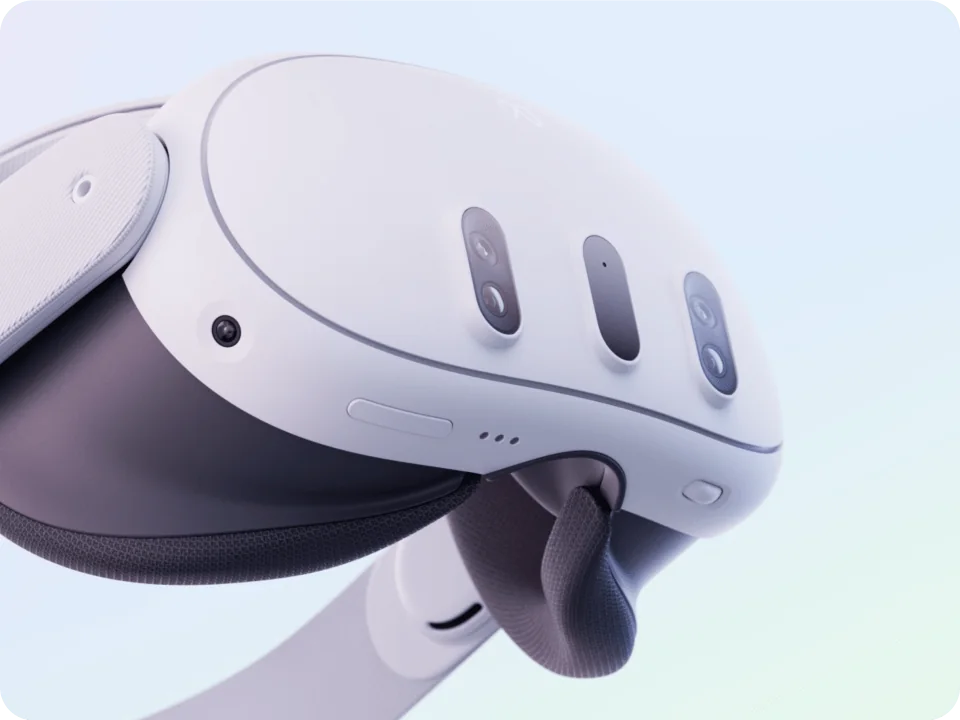
For lessons, choose goggles samodzielne (standalone): They have their own processor, battery, and memory; they do not require a computer or cables. You turn them on, put them on, and they work. Computer-based goggles (PCVR) have better graphics, but each workstation requires a computer with a powerful graphics card, a cable, and space. This doesn’t make sense in elementary school; it might make sense in a technical high school or a design studio.
Standalone models that work well in schools (data from our product sheets):
| Model | Storage | Resolution per eye | Who are they for in schools? |
|---|---|---|---|
| Meta Quest 3S | 128 or 256 GB | 1832×1920 | for classroom sets: the same processor as Quest 3, colour passthrough |
| Meta Quest 3 | 512 GB | 2064×2208 | Sharper image (pancake lenses), plenty of memory; labs, upper-grade classes, demonstrations |
| PICO 4 Ultra | 256 GB | 2160×2160 | An alternative that doesn't require a Meta account; 12 GB RAM, 90 Hz; the Enterprise version includes fleet management tools |
What to look for when choosing:
- Konto producenta. Meta headsets require Meta accounts; for students under 13, accounts managed by a parent are provided (for ages 10 and up). In schools, this is handled through school accounts and managed mode (more on this below). PICO has its own account system, and the Enterprise version allows you to work without user accounts.
- Interpupillary distance (IPD). Children have a narrower interpupillary distance than adults. The Quest 3 adjusts from 58–71 mm, the Quest 3S from 58–68 mm, and the PICO 4 Ultra from 58–72 mm. For the youngest grades, it’s important that the adjustment goes down to 58 mm.
- Hygiene. In classroom sets, the foam face pads are replaced with silicone ones or covered with disposable covers. Factor this into your budget right away.
- Battery. Realistically, 2–2.5 hours of continuous use. For 10–15-minute lessons, this is enough for the entire day, provided the headsets are recharged between lessons.
Apps and lessons: what’s included with the headset, and what you’ll need to buy separately
This is the most common disappointment after purchase: the headset is there, but the teacher doesn’t have a lesson ready. Options:
- Free apps from the manufacturer’s store. Virtual tours, anatomy, space, 360° videos. Good for getting started, but mostly in English, without lesson plans and without the teacher having control over what the student sees.
- Educational platforms with lessons in Polish (paid annual licenses). They provide lesson plans aligned with the core curriculum and a teacher dashboard for managing the class. Check which VR headsets a given platform works with before choosing your equipment: some platforms support specific models.
- Custom materials. 360° videos shot with a camera, scenes created by students. This requires an extracurricular club and the teacher’s time.
Our advice: Start with 3–4 free apps, conduct your first lessons, and purchase a platform license only once you know which subjects and classes are actually using VR. We help you select apps based on subject and age group; examples of classes we’ve taught include: history lessons on World War I, an expedition to Antarctica, physics experiments, a tour of Paris during a language class, and lessons on space and astrophysics.
Charging and storage: a carrying case or a cabinet
Eight headsets mean eight chargers, eight cables, and eight places where things can get lost. Two solutions:
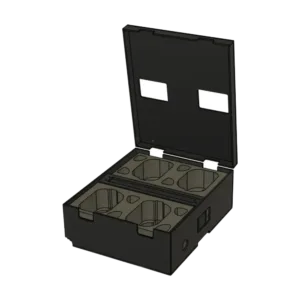
- Transport and charging case for 4, 6, 8, or 10 headsets. The headsets are transported in it between classrooms, and after class, you plug in a single cable and everything charges. Our ZenithXR case for Meta Quest 3 / 3S It is constructed of aluminum and waterproof plywood, comes in both a transport and a charging version, and is custom-made to fit the Quest 3 and 3S.
- Charging cabinet (cart) holds 20 headsets, lockable, on wheels. Zioxi VR charges 20 headsets simultaneously via USB-C, with up to 20 W per port, holds controllers and fits Quest 3/3S, PICO 4 and VIVE Focus 3. It makes sense for 15–20 headsets or a lab where the headsets stay in the room.
Rule: For fewer than 10 headsets, use a carrying case; for more than 15, use a cabinet; for numbers in between, it depends on whether the setup is moved around the school.
Device management (MDM): who will turn on 20 goggles at once
With 4 headsets, a teacher can manage them manually. With 10–20, a device management system (MDM) is needed: a single app that installs software on all headsets, blocks the app store and browser, sets kiosk mode (students see only the selected app), and displays the battery level. Manufacturers have their own tools (Meta for businesses and schools, PICO Enterprise), and there are also independent systems. The cost is typically an annual fee per device. Without MDM, a set of 20 headsets becomes 20 separate phones that need to be configured.
Teacher training and the first lesson
Equipment without a trained teacher stays in the closet. When pricing a kit, it’s worth including: setup and account configuration, a 2–3-hour training session on operation and lesson delivery, a joint first lesson with the class, and technical support. We provide this as part of our implementation service; if you’re buying elsewhere, ask directly who will come and set up the equipment.
Funding: Laboratories of the Future and other sources
Many elementary schools have purchased VR headsets as part of the Laboratories of the Future program, run by the Ministry of Education in collaboration with the GovTech Center, with funding provided without any required school contribution. Before making a purchase, check the program’s website for the current equipment catalog and spending guidelines for the current school year, as conditions and deadlines are subject to change. Other sources include the budget of the school’s governing body, the parent-teacher association, and EU projects implemented by municipalities. It is helpful to include a specification of the kit: with prices and a description of how it will be used in class: with your application; we can prepare such a specification upon request.
Pre-order checklist
- Usage scenario: lessons, lab, or demonstrations.
- Number of headsets plus spares.
- Standalone model with IPD adjustment starting at 58 mm.
- Deployment plan: free to start, license after pilot program.
- Storage: carrying case or cabinet.
- Management (MDM) for 10 or more headsets.
- Hygiene covers and spare straps.
- Teacher training and the first lesson included in the price.
- Warranty, service support and a VAT invoice for the school.
- Funding source and required documents.
Example packages
| Kit | Contents | Who it is for |
|---|---|---|
| Start | 4× Meta Quest 3S 128 GB, a case for 4 headsets, hygiene covers and training | a pilot in one class or an extracurricular club |
| Klasa | 8–10× Meta Quest 3S, a charging case for 8–10 headsets, covers, MDM, training and the first lesson | rotating subject lessons |
| Pracownia | 15–20× Meta Quest 3 or PICO 4 Ultra, a Zioxi cabinet for 20 headsets, MDM, an educational platform licence and training | a VR lab or upper-secondary school |
Package prices depend on the number of headsets and licences. We prepare a quote with a VAT invoice for the school within 24 hours.
FAQ
At what age can students use VR headsets?
Manufacturers set a minimum age for their devices and accounts. Meta offers parent-managed accounts from age 10 and full accounts from age 13. In schools, VR is typically used from Year 4 onwards, in short 10–15 minute sessions with breaks. For Years 1–3, brief demonstrations are better than independent work in a headset.
Do VR headsets require a computer?
Standalone models such as Quest 3, Quest 3S and PICO 4 Ultra do not. They only need Wi-Fi to download apps. PC-connected headsets make sense in specialist design labs, not in ordinary lessons.
How long does it take to charge a set?
A full charge for one headset takes around 2 hours. A charging case or cabinet charges every headset at once, so a set stored after the final lesson is ready the next morning.
Does every student need an account?
No. In managed mode (MDM), the headsets use school accounts or no individual accounts, while the teacher selects an app for the whole group. This means students do not need to sign in and cannot access the store.
Can the teacher see what a student sees in the headset?
Yes. The headset view can be displayed on an interactive whiteboard or monitor over Wi-Fi or by cable, and educational platforms let the teacher view every student at once.
How do you manage hygiene with 25 students?
Use wipe-clean silicone face covers between students or disposable hygiene masks. Also provide lens wipes and a short cleaning procedure after each group.
Would you like a package tailored to your school? Tell us how many classes will use VR and for which subjects, and we will prepare a specification with prices, apps and an implementation schedule: request a quote.

Author
Dariusz Walczak
Dariusz Walczak is responsible for marketing at Zenith XR. He manages the brand's communications and blog content.
Potrzebujesz konkretu?
Choose the right XR equipment for your needs
Tell us how you plan to use XR headsets. We will help you choose the right equipment for home, school or business.
Related articles
 Guides
VR headsets and Laboratories of the Future: what the programme actually says, what it does not say and how schools can use it today
6 min czytania Guides
PICO 4 Ultra Enterprise or Meta Quest 3 for business: which should you choose for training, fleet management and presentations?
5 min czytania Guides

Dodaj komentarz