


No products in the cart.
RealWear, Vuzix or Epson: AR glasses for servicing, manufacturing and logistics
RealWear, Vuzix czy Epson: AR glasses do serwisu, produkcji i logistyki
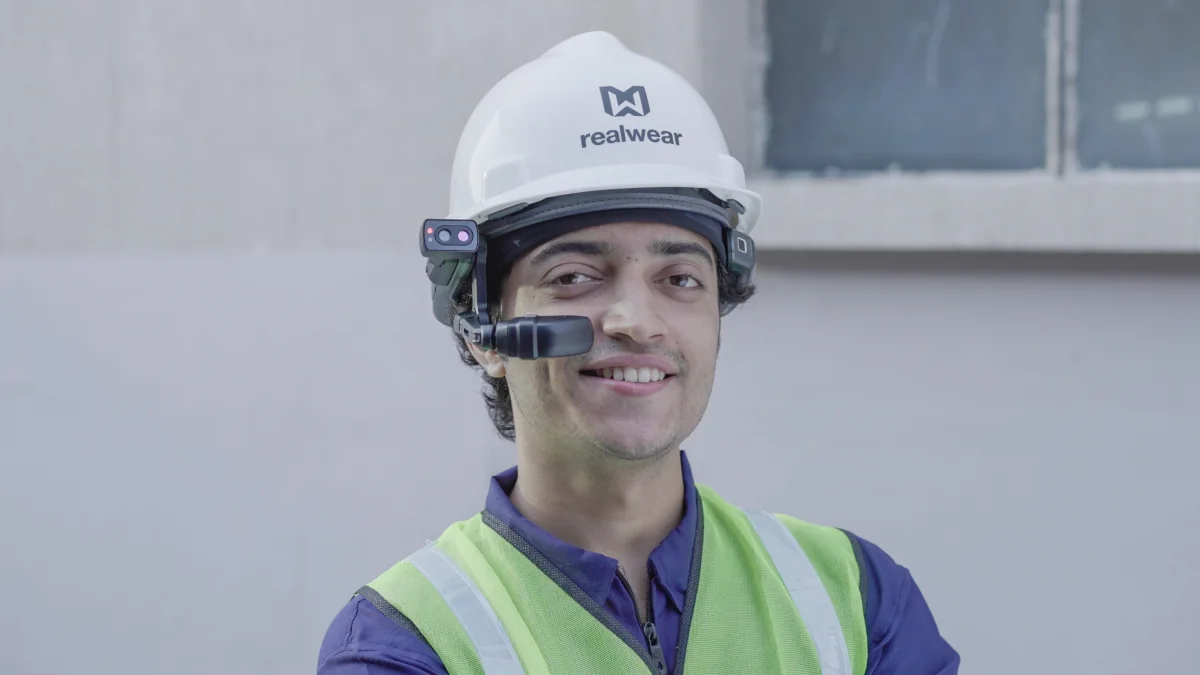
Businesses do not buy AR glasses simply ‘for AR’. They buy them for a specific task: a technician needs to see instructions without putting down a spanner; an expert at headquarters needs to see what the field service engineer sees; a warehouse worker needs to scan codes without reaching for a terminal. The task determines which of the three equipment types to choose. Below, we compare models in our range using data from their product pages.
Three types of AR glasses for work
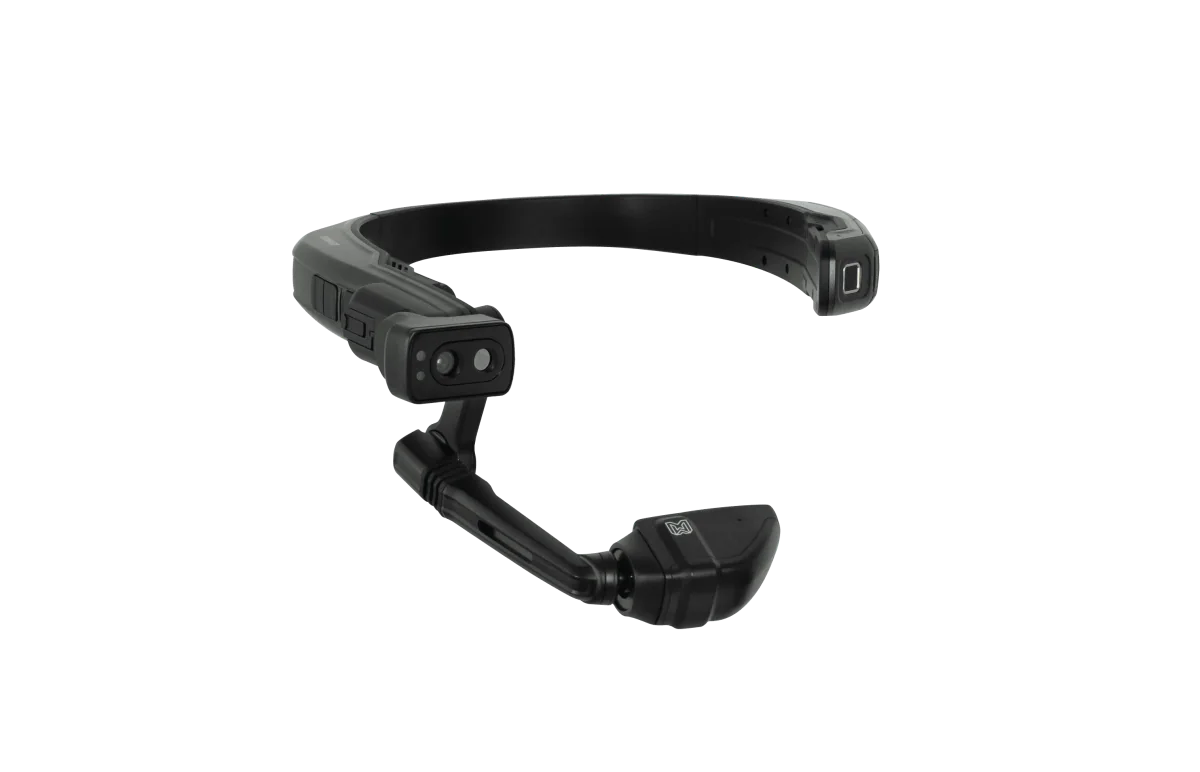
- Voice-controlled head-mounted computer with a monocular display (RealWear). The display sits below the line of sight of one eye, like a small monitor; it does not overlay images onto your surroundings. It does, however, work in noisy conditions, with gloves and in the rain.
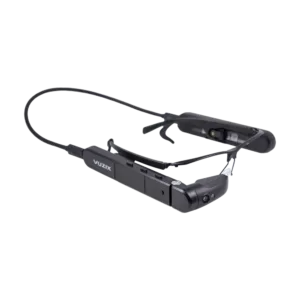
- Glasses with a transparent display (Vuzix Blade 2, Epson Moverio). You can see your surroundings with data overlaid on them. They are lighter, but less rugged and have a shorter battery life.
- Glasses as an accessory for a phone or terminal (Vuzix M400C via USB-C) and glasses with a scanner (Vuzix LX1). For warehousing and order picking.
Model comparison
| Model | Type | Display | Camera | Ruggedness | Controls | Weight |
|---|---|---|---|---|---|---|
| RealWear Navigator 520 | head-mounted computer, monocular | 1280×720, 24° | yes | dust, water, drops (according to the manufacturer) | voice in noise up to 100 dB, buttons | 270 g |
| RealWear Navigator 500 | head-mounted computer, monocular | 854×480, 20° | 48 MP, 1080p/60 | IP66, MIL-STD-810H | voice up to 100 dBA | 270 g |
| RealWear HMT-1 | head-mounted computer, monocular | 854×480, 20° | yes, stabilisation | IP66 | voice (also in Polish) | — |
| Vuzix LX1 | glasses with a barcode scanner | OLED >2000 nit | 12 MP, 1080p/60 | outdoor use, replaceable battery | voice, buttons | — |
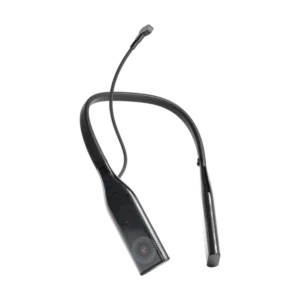
| Vuzix M400C | USB-C accessory for a host device | OLED 640×360, 16,8° | 4K, 12,8 MP | IP67 | touch, voice, buttons | 68 g |
| Vuzix Blade 2 | see-through glasses (waveguide) | 480×480, 20°, 2000 nit | 8 MP | for indoor work and light field use | touch, voice | 90 g |
| Epson Moverio BT-45CS | see-through glasses (Si-OLED) | 1920×1080, 34° | 8 MP | wzmocniona konstrukcja terenowa | BO-IC400 controller, buttons | 185 g |
| Epson Moverio BT-40SN | see-through glasses (Si-OLED) | 1920×1080, 34°, 1000 nit | 13 MP (in the controller) | biuro, lekki teren | controller with Android 9 | 95 g |
Data from Zenith XR product pages (correct on the publication date). Blank fields mean that the product page does not provide this information; we can supply it on request.
Servicing and maintenance: remote expert
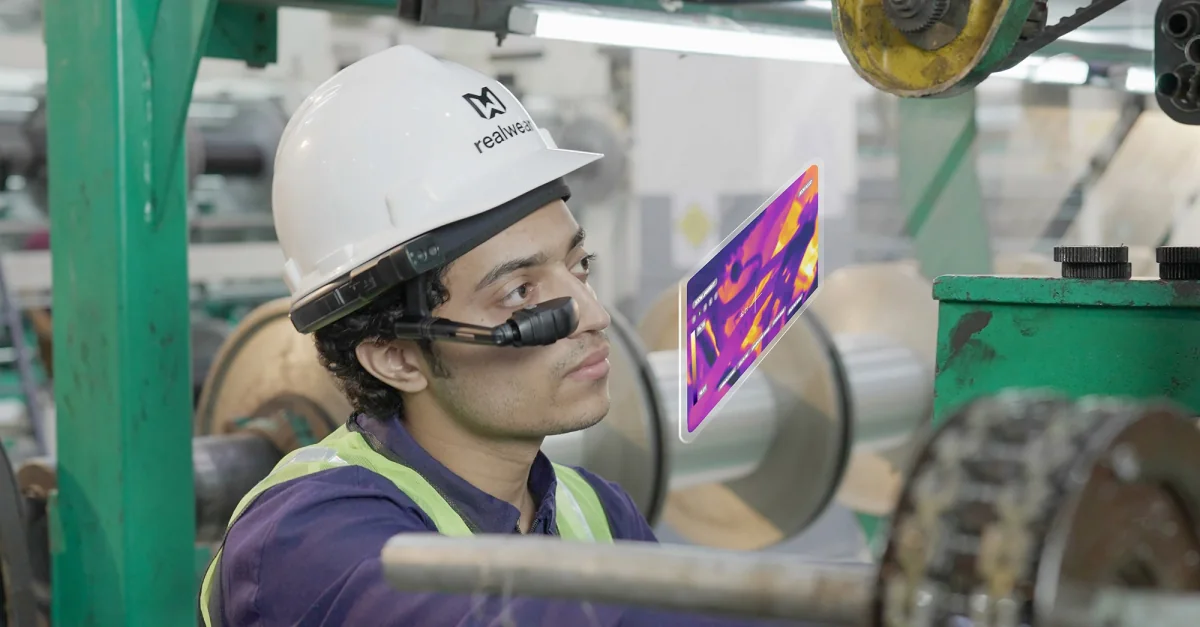
Task: a technician at a machine makes a video call to an expert, who sees the camera feed, draws guidance on the screen and sends documents. The key requirements are the camera, noise-resistant microphones and a battery that lasts a full shift.
Choice: RealWear Navigator 500 or 520. The 500 has a 48 MP camera, while the 520 has a newer processor (2.0 GHz octa-core, 4 GB RAM). Both offer voice recognition in noise up to 100 dB and a replaceable battery (hot-swappable in the 500, without switching it off). The 500's IP66 enclosure and MIL-STD-810H rating allow it to operate in rain and dust. If the team works in Polish, the HMT-1 understands Polish commands; check language support on the Navigators in the current software version.
Check before purchase: the remote support platform (Teams, Zoom or dedicated service applications) and licences.
Manufacturing and assembly: step-by-step instructions
Task: an employee follows a sequence of instructions, confirms each step and may use the camera for quality control.
Choice: in a noisy production hall RealWear; for precision assembly where you want to overlay guidance onto the workstation view, Epson Moverio BT-45CS (Full HD, 34° field of view, transparent display, controller allowing complete mobility) or Vuzix Blade 2 (90 g, waveguide, Android 11, integration with business tools). BT-45CS weighs 185 g; compare its display and wearing comfort with the other models before choosing.
Logistics and warehousing: order picking and scanning
Task: picking orders, scanning codes and confirming locations without putting boxes down.
Choice: Vuzix LX1 with a barcode scanner, an OLED display readable in a bright warehouse (over 2,000 nits), Wi-Fi 6E, NFC pairing with a terminal and a replaceable battery for a full shift. An alternative if the company already has Android terminals or phones: Vuzix M400C as a USB-C accessory (one cable for video, data, camera and power; IP67; 68 g worn on the head).
Workplace training and audits
Task: a new employee learns a procedure, while an auditor documents the condition of a machine with photos and video.
Choice: camera and comfort. RealWear Navigator 500 (48 MP) for documentation; Epson BT-40SN (95 g, GPS, plug-and-play mode) for training in offices and light field conditions where full ruggedness is not required.
What to consider during deployment
- Battery and an 8-hour shift. Models with replaceable batteries (RealWear, LX1) can cover a shift; transparent glasses often require a power bank or a controller with its own battery (Epson).
- Noise. Test voice control at the workstation, not in the office. RealWear specifies 100 dB.
- Prescription and safety glasses. RealWear can be worn with a hard hat and safety glasses; check the fit of transparent glasses.
- Fleet management (MDM). For fleets of several devices or more: remote application installation, kiosk mode and restrictions.
- Pilot. Start with 2–3 devices at one workstation and measure downtime before and after. This is the best evidence for a budget discussion.
Choosing a setup and running a pilot
When configuring a setup, we consider the number of workstations, software licences and device configuration. For larger deployments, we organise a pilot so that you can test the equipment in real working conditions.
FAQ
How do industrial AR glasses differ from consumer models (XREAL, Viture)?
Consumer AR glasses are primarily a portable display for films and laptop work, without rugged protection, a camera for remote support or voice control. Industrial models have an IP66/IP67 enclosure, replaceable batteries, cameras and voice control that works in noisy conditions.
Do AR glasses work with gloves and a hard hat?
Yes. Voice-controlled (RealWear) and button-operated models are designed for use with gloves; RealWear can be fitted to a safety helmet.
Do I need specialist software?
For remote support, Teams or Zoom in a version for the device is usually sufficient; step-by-step instructions and order picking require industry-specific applications. We select them with the customer before purchase.
How long does deployment take?
A pilot with 2–3 devices can be launched in a few days: configuration, accounts and team training. Full deployment depends on integration with the company's systems.
What warranty and support are available?
We sell devices with the manufacturer's warranty; for deployments, we offer after-sales support and help with configuration. Details are included in the quotation.
Looking for AR glasses for a specific workstation? Describe the task, conditions (noise, dust, gloves) and number of workstations, and we will prepare a recommendation and quotation.

Author
Dariusz Walczak
Dariusz Walczak is responsible for marketing at Zenith XR. He manages the brand's communications and blog content.
Potrzebujesz konkretu?
Choose the right XR equipment for your needs
Tell us how you plan to use XR headsets. We will help you choose the right equipment for home, school or business.
Related articles
 Guides
VR headsets and Laboratories of the Future: what the programme actually says, what it does not say and how schools can use it today
6 min czytania Guides
PICO 4 Ultra Enterprise or Meta Quest 3 for business: which should you choose for training, fleet management and presentations?
5 min czytania Guides
Dodaj komentarz