


No products in the cart.
Emotiv EEG systems for research and neurofeedback: Insight, EPOC X, MN8 and Flex 2: which should you choose?
Emotiv EEG systems for research and neurofeedback: Insight, EPOC X, MN8 and Flex 2: which should you choose?
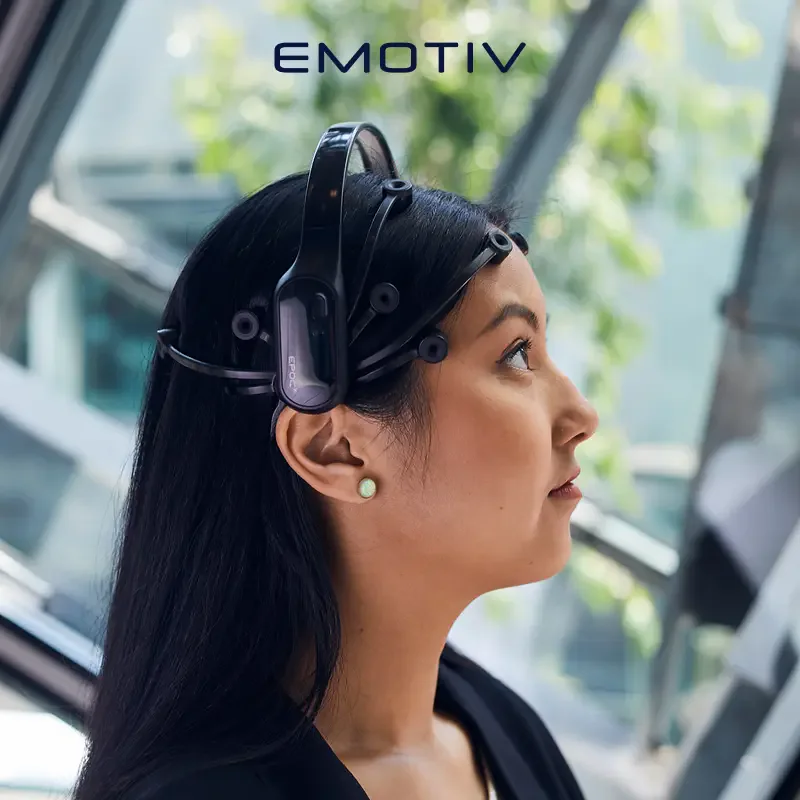
Choosing an EEG system for research comes down to four questions: how many channels your research plan needs, how quickly you want to fit the cap, whether you need the raw signal, and your available budget. Below, we compare four Emotiv systems from our range, from two-channel earphones to a 32-channel laboratory system. We supply universities and research institutes with VAT invoices and prepare specifications for requests for quotations.
Comparison by the Numbers
| Model | EEG Channels | Elektrody | Sampling Rate | Connectivity | Typical use |
|---|---|---|---|---|---|
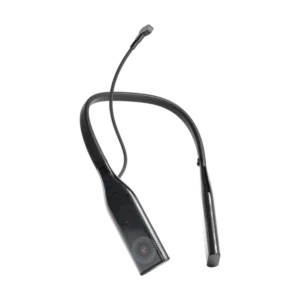
| Emotiv MN8 | 2 | dry, conductive elastomer in the ear canal | 128 SPS (8 kHz internally) | Bluetooth | attention and stress monitoring |
| Emotiv Insight | 5 | semi-dry polymer | 128 Hz | Bluetooth | neurofeedback, brain-computer interfaces, wellness |
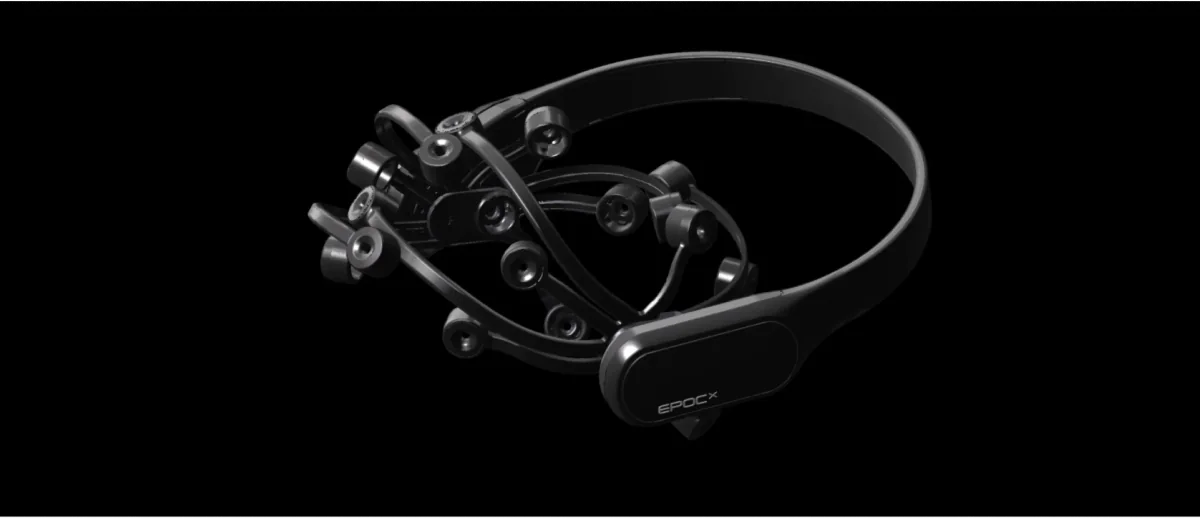
| Emotiv EPOC X | 14 | solankowe | 128 or 256 Hz | Bluetooth, USB-C | scientific research, brain-computer interfaces |
| Emotiv Flex 2 Saline | up to 32 (+2 reference), configurable | electrolyte, cap with 74 holes in a 10-20 configuration | 256 SPS (2,048 Hz internally) | Bluetooth 5.2, USB-C | laboratories, research teams, BCI projects |
All four use the same software: EmotivPRO and the Cortex API. The MN8, Insight, and EPOC X are compatible with computers and mobile devices; the Flex 2 is designed to work with a computer.
How many channels do you really need?
This question determines your purchase, and the answer stems from your research question, not your budget.
- 2 channels (MN8). These are sufficient when measuring states such as attention level, cognitive load, and stress during a task. You cannot reconstruct activity topography or evoked potentials from specific brain regions using them. Advantage: Participants wear them like headphones, so you can collect data in field conditions and with a large number of people.
- 5 channels (Insight). A practical minimum for neurofeedback and simple brain-computer interfaces, where a few measurement points and a quick setup are what matter. Semi-dry electrodes do not require gel, so one session takes only a few minutes to prepare.
- 14 channels (EPOC X). The electrode layout follows the 10-20 standard, i.e., the electrode configuration used in the literature. This is the first level at which you can plan a study comparable to published research and conduct cross-regional analysis. Sampling rate up to 256 Hz.
- Up to 32 channels (Flex 2 Saline). The cap with 74 holes allows you to position the electrodes according to a specific study plan, rather than the other way around. For studies in which a reviewer will ask about coverage and references.
Electrodes: How This Changes Your Daily Work
- Suche (MN8): you put it on and take a measurement. Minimal setup, fewest channels.
- Semi-dry polymer (Insight): no gel; the sensors require moistening and periodic replacement.
- Solankowe (EPOC X, Flex 2): the electrodes are saturated with saline solution instead of gel. Setup takes longer than with dry electrodes, but it’s much faster and cleaner than with traditional gel systems, and the participant doesn’t end up with sticky hair. For serial testing, this represents a real time savings.
For psychology and cognitive science labs
If the lab is to conduct classes and supervise thesis projects, a practical choice is EPOC X: a 10-20 layout, 14 channels and a short fitting time, which matters when working with a group of students. For advanced research team projects or a grant involving publication, plan for Flex 2 Saline to use the EPOC X as a supplementary training station.
For UX research and neuromarketing
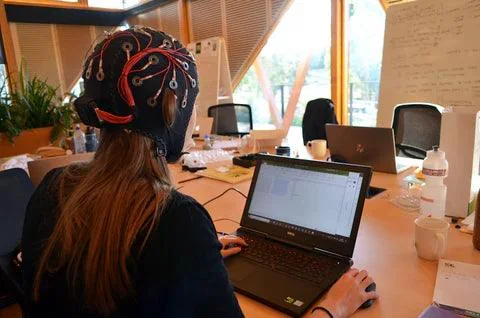
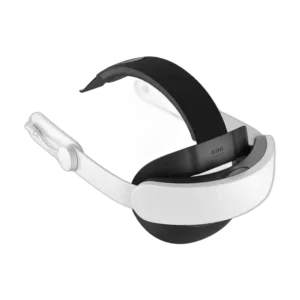
What matters here is the number of participants and the duration of a single session, not the electrode density. MN8 or Insight allow you to test a dozen or so participants per day and combine the data with screen recordings, eye-tracking, or task-based tests. If you’re studying reactions in virtual reality, pay attention to how the EEG set works with the headset strap.
For neurofeedback and teaching
Insight this is the most common choice: five channels, no gel required, quick setup, and software with pre-set indicators. The MN8 also works well for demonstration sessions because its design isn’t intimidating and it can be passed from hand to hand.
For projects combining EEG with virtual reality
Combining an EEG system with VR goggles requires checking two things: whether the cap or headband interferes with the goggles’ strap, and whether the timestamps between the two systems can be synchronized. Insight and MN8 are the most mechanically convenient in this regard. If you’re planning such a study, describe the scenario to us, and we’ll check compatibility with a specific headset model and with the Pupil Labs eye-tracking module, if the study is to combine EEG with eye tracking.
Software and Licenses: What to Add to Your Budget
All kits work with EmotivPRO and the Cortex API. The scope of data access, including access to raw EEG signals, depends on the software license from the manufacturer and is not included in the price of the device. Before submitting a funding application, determine which license option your project requires and for how many workstations. We can help you compile this into a single specification so that the license isn’t missing from the delivery when the equipment arrives.
Emotiv kits are research and neurofeedback devices. They are not medical devices and are not intended for diagnostic purposes.
Purchase by a university or institute
We issue a VAT invoice to the institution, prepare technical specifications for a request for proposal, and provide the registration details required for the procurement process. If the purchase goes through the public procurement department, please send us the required format for the description of the subject of the contract, and we will prepare a description of the parameters without specifying a single brand where the procedure prohibits it.
FAQ
How many EEG channels are needed for scientific research?
For research comparable to that in the literature, the 10-20 configuration is standard, meaning at least a dozen or so channels: we offer the EPOC X (14) or Flex 2 Saline (up to 32). Two and five channels are used for status monitoring, not for topographic analysis.
How do saline electrodes differ from gel electrodes?
Saline electrodes are saturated with a salt solution instead of gel. Preparation is faster and cleaner, and the participant does not need to wash their hair after the test. Signal quality is sometimes slightly lower than in professional gel systems.
Does the kit require a separate license?
The device works with EmotivPRO and the Cortex API, and the scope of data access depends on the license option offered by the manufacturer. Be sure to factor this into your project budget.
Is Emotiv medical equipment?
No. It is research and neurofeedback equipment, not intended for diagnosis or treatment.
Can the EEG be connected to VR headsets?
Yes, but you need to check the mechanical fit with the headset strap and how the systems are synchronized. We can advise you based on your specific research scenario.
Do you issue invoices for universities and assist with technical specifications?
Yes. We provide a VAT invoice per unit, technical specifications for a request for proposal, and registration details for the procurement process.
Describe the research topic and the number of workstations, and we’ll prepare a kit selection and quote: request a quote per unit. Wszystkie modele: neurotechnologia.

Author
Dariusz Walczak
Dariusz Walczak is responsible for marketing at Zenith XR. He manages the brand's communications and blog content.
Potrzebujesz konkretu?
Choose the right XR equipment for your needs
Tell us how you plan to use XR headsets. We will help you choose the right equipment for home, school or business.
Related articles
 Guides
VR headsets and Laboratories of the Future: what the programme actually says, what it does not say and how schools can use it today
6 min czytania Guides
PICO 4 Ultra Enterprise or Meta Quest 3 for business: which should you choose for training, fleet management and presentations?
5 min czytania Guides

Dodaj komentarz