
No products in the cart.
VR training equipment for business: number of headsets, management, hygiene, cases and pilot
VR training equipment for business: number of headsets, management, hygiene, cases and a pilot deployment
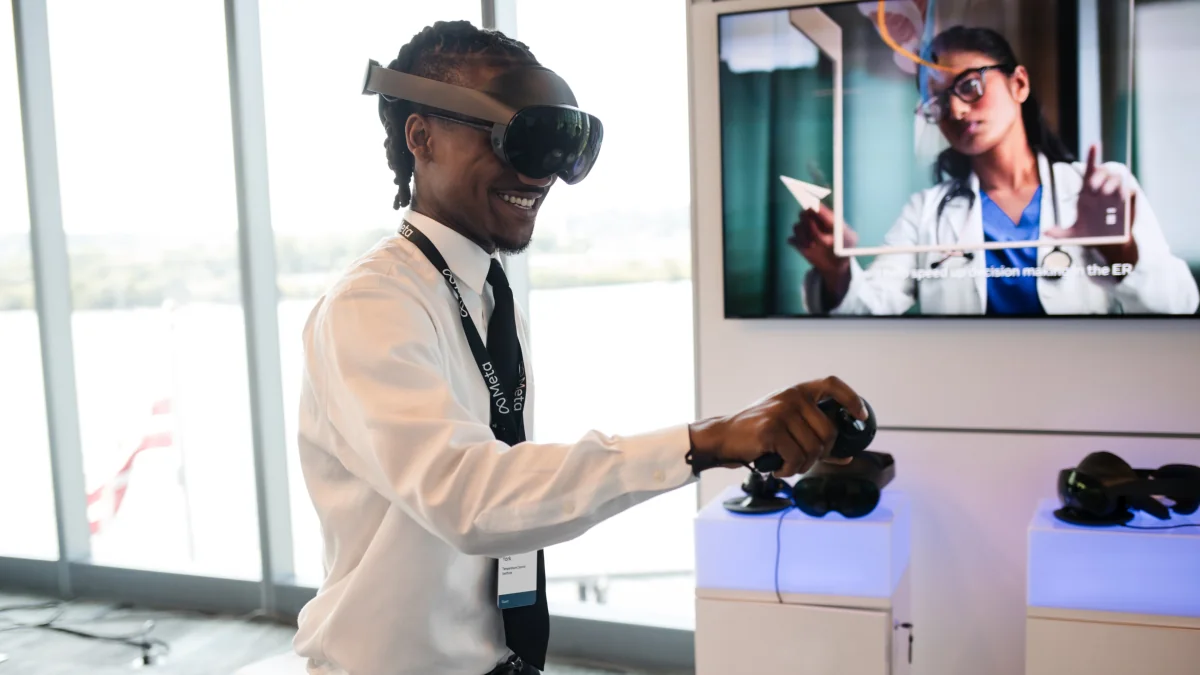
Training companies and health and safety departments sell applications for fire simulations, working at height and production-line procedures. They rarely say what equipment these applications should run on, how many headsets to buy for a group, or who will charge, clean and update them. This article covers that second, hardware side of deployment. It is based on the requirements of training application developers, CIOP-PIB guidance on VR simulators for health and safety training, and deployments of multi-station sets.
Why VR training works
The Central Institute for Labour Protection (CIOP-PIB) describes immersive virtual reality as a training tool for hazardous situations: extinguishing fires in a mine, operating machinery, welding and power engineering. The stated benefits are ‘accelerating the training process, reducing training costs, increasing training effectiveness’ and building habits without exposure to risk. CIOP also lists the equipment: headsets (HMDs), gloves, a motion tracking system and replicas of real objects. This is our starting point: the equipment must suit the scenario, not the other way round.
Krok 1: scenariusz decyduje o goglach
- On-the-spot procedural and health and safety training (you stand, look around and point with a controller or your hand): standalone headsets. You do not need a computer at each station.
- Simulators involving movement around a facility, welding and machine operation using replicas: often PC headsets or standalone headsets with additional tracking (trackers, gloves, treadmill). Agree this with the application developer.
- Presentations, onboarding and visits to a virtual facility: standalone headsets with good image quality.
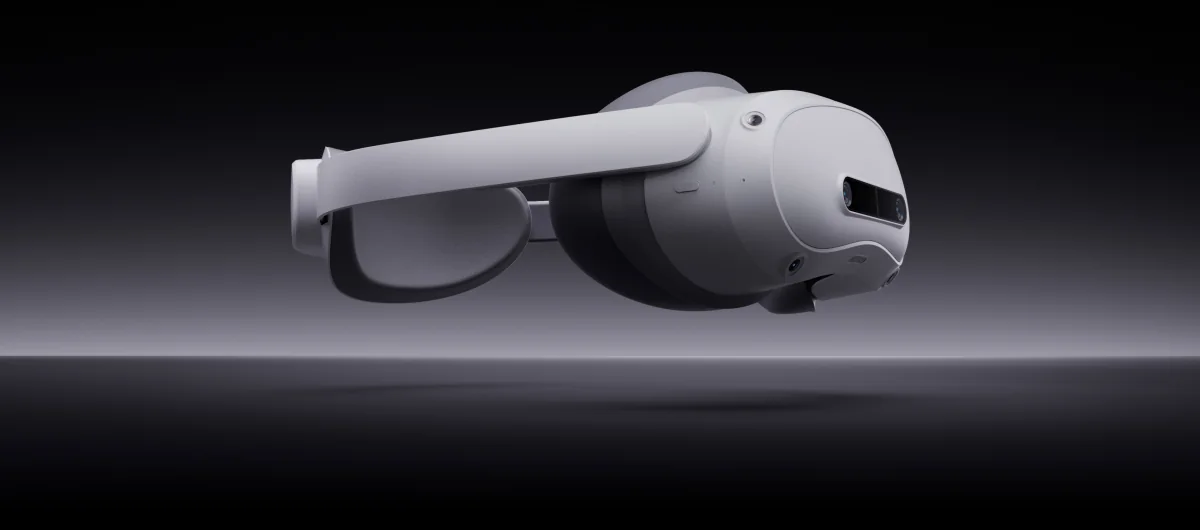
Standalone models for training (data from product pages in our shop):
| Model | Storage / RAM | Resolution per eye | Why businesses choose it |
|---|---|---|---|
| PICO 4 Ultra Enterprise | 256 GB / 12 GB | 2160×2160 | business and training version: works without user accounts, fleet management tools, powerful Snapdragon XR2 Gen 2 processor, colour passthrough |
| Meta Quest 3 | 512 GB / 8 GB | 2064×2208 | widest application library, pancake lenses, business accounts and management available |
| Meta Quest 3S | 128–256 GB / 8 GB | 1832×1920 | the same processor as Quest 3; for sets of 10–20 headsets |
Always ask the application developer for the list of supported headsets and operating system version. This should be your first question, not your last.
Step 2: how many headsets per group
Health and safety training for 12 people does not require 12 headsets. A VR session lasts 10–20 minutes and a training module lasts 30–60 minutes, so the group rotates:
- 4 headsets can serve a group of 8–12 people rotating over 2 hours.
- 6–8 headsets is the standard for a permanent training station at a facility.
- 10–20 headsets for training centres and onboarding hundreds of people a year.
Add one spare headset for every 6–8 units and remember to allow charging time between groups.
Step 3: fleet management (MDM)
With more than 3–4 headsets, you need a mobile device management (MDM) system: install an application on all headsets from one dashboard, block the store and browser, launch kiosk mode (participants see only the training), and check battery levels and versions. Manufacturers offer their own tools (Meta for business, PICO Enterprise), and independent systems also support multiple brands. The cost is usually an annual fee per device; we include it in the set quotation from the outset.
Step 4: charging, transport and storage
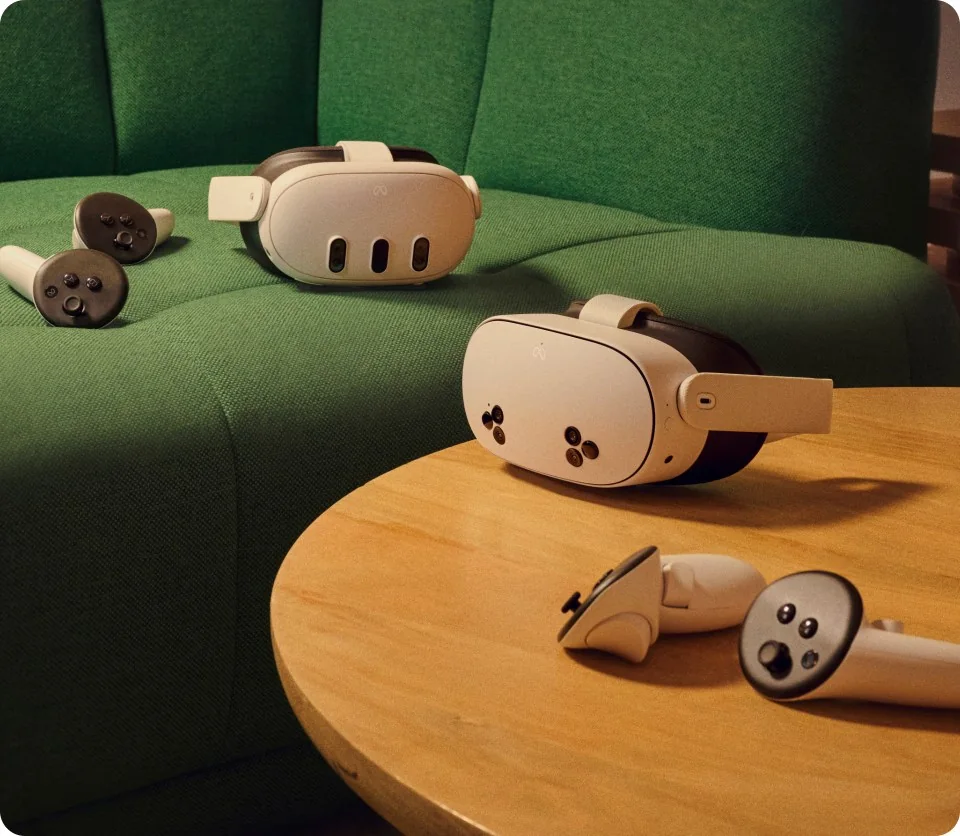
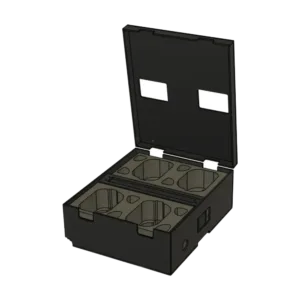
- Transport and charging case for 4, 6, 8 or 10 headsets when the set moves between facilities or rooms: our ZenithXR case for Quest 3/3S (aluminium and water-resistant plywood, charging from a single cable).
- Charging cabinet for 20 headsets for a training centre: Zioxi VR (20 USB-C ports up to 20 W, lock, castors; Quest 3/3S, PICO 4, VIVE Focus 3).
- Zasada: below 10 headsets, choose a case; above 15, choose a cabinet.
Step 5: hygiene and ergonomics
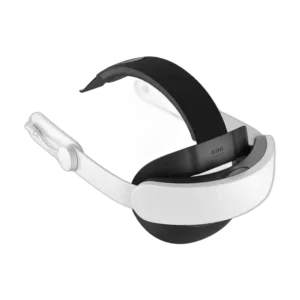
Dozens of people using the same headsets each week creates a health and safety issue of its own. At minimum, use silicone facial interfaces instead of foam, lens wipes, disposable hygiene masks for participants and adjustable straps (the standard fabric straps do not fit different head sizes securely). Allow time between participants for cleaning and set a session limit, as some people experience simulator sickness in scenarios involving movement.
Step 6: a pilot instead of a large order
The best deployments start with 2–4 headsets, one application and one group. Measure training time, the number of repetitions, post-training test results and participant feedback. Only then should you buy a fleet and a cabinet. A pilot lets you test your assumptions before a full deployment and provides evidence for management. It also tests the Wi-Fi network, accounts and who in the company will be responsible for the headsets.
Example training setups
| Kit | Contents |
|---|---|
| Pilot | 4× Meta Quest 3S, case for 4, hygiene interfaces, configuration and operator training |
| Stanowisko szkoleniowe | 8× PICO 4 Ultra Enterprise or Quest 3, case for 8, MDM, interfaces, training |
| Centrum szkoleniowe | 20× headsets, Zioxi cabinet, MDM, spare straps and interfaces, support |
The training application is a separate cost charged by its developer (monthly subscription models are available on the market). We work with the customer and application developer to align hardware and licences in a single schedule.
FAQ
Do you need a computer for VR training in a company?
Not for most procedural and health and safety training; standalone headsets are sufficient. A computer is required for simulators with advanced graphics or additional equipment (gloves, treadmill), as determined by the application developer.
How many headsets should you buy for a group of 12?
Usually 4–6. Participants rotate because a VR session lasts 10–20 minutes and the rest of the training takes place outside the headset.
How does PICO 4 Ultra Enterprise differ from the standard PICO 4 Ultra?
The image specifications and processor are the same; the Enterprise version provides business tools (operation without user accounts and fleet management) and licensing for commercial use. The standard version is sufficient for home use; choose Enterprise for training and fleets.
Do we need Meta accounts for every employee?
No. In managed mode, headsets use company accounts and MDM launches the selected application without participants signing in.
How do you maintain hygiene with multiple users?
Silicone facial interfaces, disposable masks, wiping lenses with a microfibre cloth and breaks between participants. For high turnover, keep spare interfaces to swap in.
Can you hire the equipment for a pilot?
For a one-off training session or event, yes, from event companies. For a pilot intended to test your scenario and network, it is better to use the target equipment. We can help you select a minimum set.
Planning VR training and unsure which equipment to start with? Describe the scenario, number of people and location, and we will prepare a pilot set with a quotation.

Author
Dariusz Walczak
Dariusz Walczak is responsible for marketing at Zenith XR. He manages the brand's communications and blog content.
Potrzebujesz konkretu?
Choose the right XR equipment for your needs
Tell us how you plan to use XR headsets. We will help you choose the right equipment for home, school or business.
Related articles
 Guides
VR headsets and Laboratories of the Future: what the programme actually says, what it does not say and how schools can use it today
6 min czytania Guides
PICO 4 Ultra Enterprise or Meta Quest 3 for business: which should you choose for training, fleet management and presentations?
5 min czytania Guides
Dodaj komentarz